

It’s not uncommon to see an infant sucking their thumb; in fact, research indicates that 75%-90% of newborns and infants soothe themselves by sucking one or more of their fingers. But by the time they’re two, only about 25% of toddlers still suck their thumb, and that number drops to about 12% by the time they’re age four.
And although it seems perfectly natural for an infant to suck their thumb, you might be concerned if your toddler’s habit continues, and you definitely don’t want it to affect their oral development.
So, how do you know when thumb sucking is a problem you should be worried about?
Let’s learn more about this common issue.
The Thumb Sucking Timeline
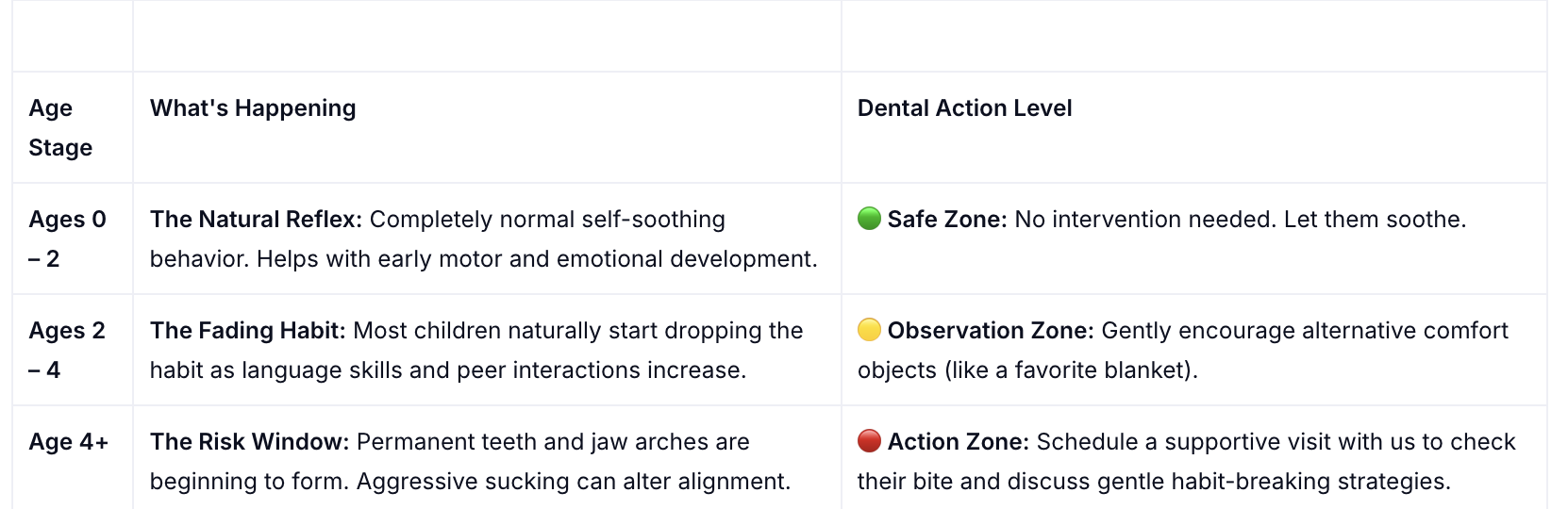
Most children stop sucking their thumbs or using pacifiers between the ages of two and four, even without parental intervention.
However, if your child continues to suck their thumb beyond age four, it could lead to certain issues.
It’s important to note the difference between active and passive sucking; if your child is passively resting their thumb in their mouth, it’s less damaging than if they are aggressively sucking their thumb, as that puts physical pressure on their palate.
How Thumb Sucking Affects Your Child’s Teeth
At a certain point, your child’s thumb sucking goes from being a cute habit to disrupting their oral development, especially if it’s vigorous and/or frequent thumb sucking.
Here are some of the common dental complications that can occur:
- Open bite — Your child’s front upper and lower teeth will no longer come together when they close their mouth.
- Crossbite — Your child’s upper jaw can narrow; this can cause their upper teeth to rest inside their lower teeth.
- Protruding incisors — Your child’s upper front teeth will push forward; this is often referred to as “buck teeth.”
Should You Be Worried?
Rest assured that your child will stop sucking their thumb, often without any intervention at all.
However, these are the general guidelines to consider:
- Under age three — You don’t need to worry about your child’s thumb sucking. It’s a natural self-soothing habit, and when they stop sucking their thumb, their baby teeth will likely go back into the proper position.
- Age three to four — It might be a good idea to ask your dentist about your child’s thumb-sucking habit. That way, they can monitor their bite and palate shape and encourage your child to stop.
- Age five and beyond — At this point, it’s ok to be concerned because your child’s adult front teeth are beginning to erupt. Prolonged thumb sucking can lead to alignment concerns and the need for orthodontic care.
How to Help Your Child Stop Sucking Their Thumb
When your child’s thumb sucking turns into a habit that doesn’t go away on its own, there are some things you can do to help them stop.
Here are some helpful tips to consider:
- Use positive reinforcement — Children love stickers and charts, so you could come up with a rewards chart to praise them when they don’t suck their thumb. Instead of scolding or shaming them, positive reinforcement often works well. Once they get a certain number of stickers, they can choose a healthy treat or a small toy.
- Address the root cause — Because your child is probably sucking their thumb to soothe themselves, you might try looking for alternative comfort methods. If you notice they suck their thumb when they’re tired or stressed, try offering them a favorite blanket or toy. Encourage them not to suck their thumb.
- Consult a professional — If neither of these tactics seems to work, you could consult your dentist for other helpful tips. If your child has a good rapport with the dental team, they might be able to use motivational techniques or explain how thumb sucking can impact their smile. In severe cases, a special oral appliance can physically keep your child from sucking their thumb.
Looking for Quality Dental Care in Lindenhurst, NY?
At Pearly Place Dental, we love meeting and forming a bond with your child, and we’d love to welcome you to our dental family! Our experienced team will happily answer your questions and help you make the best decisions for your little one’s smile.
And not only that, but we can treat your entire family, so you don’t have to worry about finding more than one dental office to fit your busy schedule.
With evening appointments to serve you better, you can more easily prioritize your family’s oral health.
To schedule a consultation or appointment, please don’t hesitate to reach out to us at (631) 226-1900. We look forward to hearing from you.